
SAAS · WORKFLOW REDESIGN
Oct 2025 - Feb 2026
Designer
Client: Brendan Donahue
Project Manager: Amy Rodriguez
Design Manager: Jersey Vargas
Designers: Hai (Harry) Nguyen, Vivian Fung, Sindhu Sivisankar, Shivani Sreedhar, Barbara Guillen, Allen Lu
Figma, FigJam, User research, Usability testing, UI/UX design, Prototyping
Tools & Skills
The Crew
Role
Redesigning a fragmented compliance review workflow for youth justice staff
Turning a fragmented compliance process into a guided workflow that juvenile justice staff can complete with greater clarity and confidence.
Through Develop for Good, I partnered with CIYJ to redesign the IRDCCR (Incident Reporting Definitional Compliance and Comprehensive Reporting) process used by over 500+ staff across juvenile justice facilities.
What initially appeared to be a form redesign quickly revealed a much larger operational problem.
Behind the IRDCCR process was a fragmented workflow spread across PDFs, emails, signatures, policy uploads, and role-based approvals. Staff frequently struggled to understand responsibilities, track progress, and coordinate next steps across multiple systems.
PROJECT OVERVIEW
Duration
What is the Incident Reporting Definitional Compliance and Comprehensive Reporting (IRDCCR)?
The IRDCCR is a recurring compliance review that is conducted every three years or when staff or policy changes occur.
This process involves juvenile justice facility staff, CIYJ coaches, and the Help Desk to document juvenile facility policies, verify incident reporting practices, and ensure compliance with CIYJ standards.
INITIAL SCOPING
IMPORTANT DEFINITIONS
THE PROBLEM
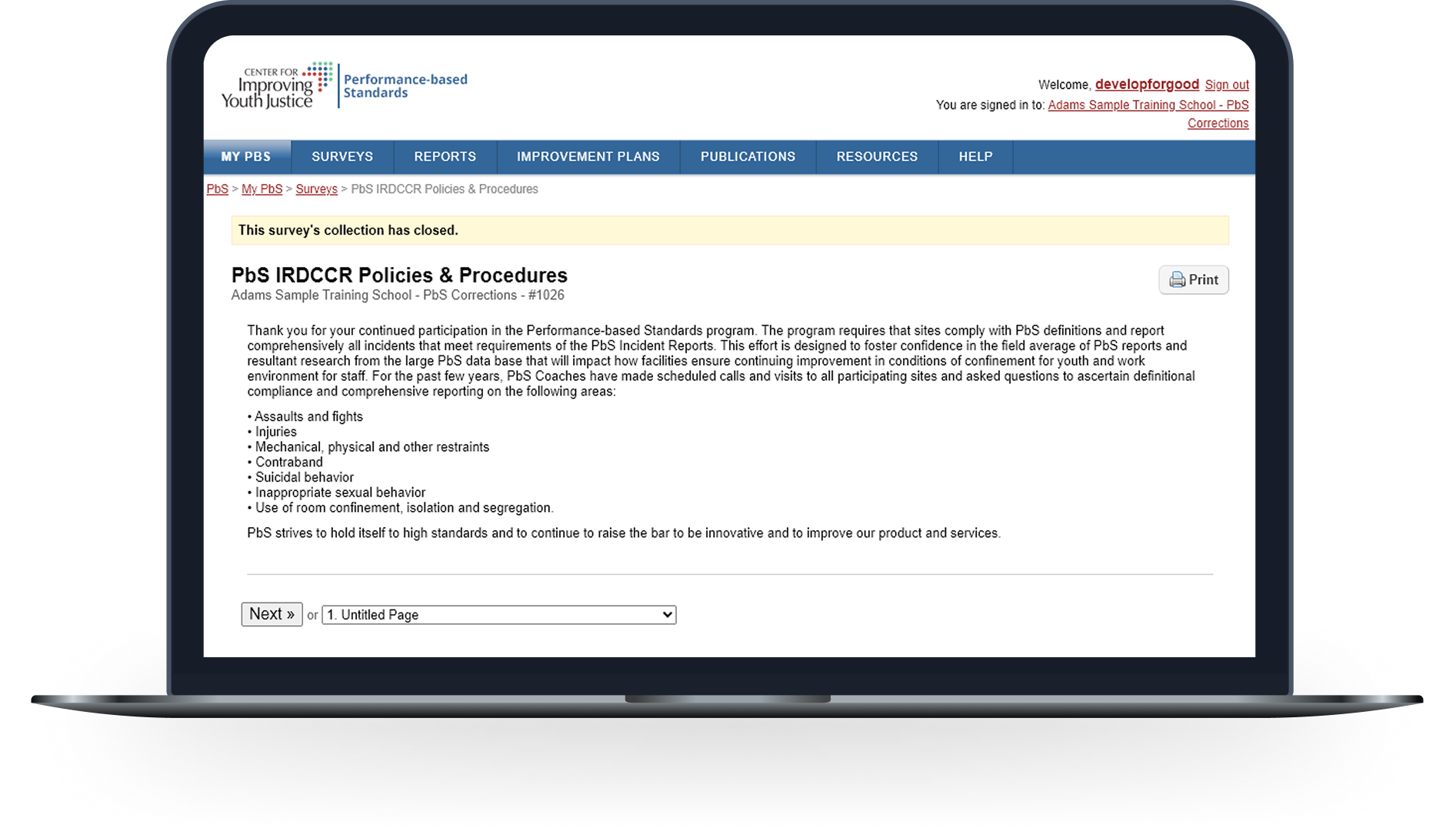
Juvenile justice staff need to complete a critical reporting process, but its fragmented steps, role-based handoffs, and years between collection cycles made it difficult for staff to know what to do next.
The original workflow extended far beyond a single form. Staff had to complete the form, complete policy and training sections, schedule a call with a coach, collect signatures, verify requirements, and coordinate approvals across multiple roles.
The current platform relied on basic survey tools that were not designed to support complex, multi-step workflows, so many steps still happened outside the system.
Juvenile justice staff need to complete a critical reporting process, but its fragmented steps, role-based handoffs, and years between collection cycles made it difficult for staff to know what to do next.
The original workflow extended far beyond a single form. Staff had to complete the form, complete policy and training sections, schedule a call with a coach, collect signatures, verify requirements, and coordinate approvals across multiple roles.
The current platform relied on basic survey tools that were not designed to support complex, multi-step workflows, so many steps still happened outside the system.
How might we streamline the IRDCCR data-collection process into a guided workflow that clarifies tasks, responsibilities, and next steps to reduce confusion, administrative back-and-forth, and errors during data collection?
91%
Of students care about climate change
80%
Expect their institutions to take action
60%
Of students say they want to be more involved
Sources: (1) Do Something Strategic (2) The Guardian (3) Double the Donation
Problem Statement
How might we encourage college students in Orange County to engage in current environmental, social, and political community issues through volunteering?
Understanding why students struggle to get involved.
To better understand why students struggled to get involved in volunteering, I helped our team analyze existing platforms and speak with students to identify key barriers to engagement. We focused our research on 3 goals:
How students find and manage volunteering opportunities
What motivates or discourages students from participating
How information, access, and peers shape students' awareness and engagement
This gap between intent and action became our main challenge to address.
Competitive Analysis
We analyzed 9 volunteering platforms to identify gaps in event discovery, information access, and community features
User Interviews
We conducted 9 interviews with UCI students with volunteer experience to understand their motivations and barriers
Volunteering opportunities were somewhat visible, but context and community were often missing.
While some platforms allowed students to browse volunteer opportunities, discovering the right event and understanding what it involved was often difficult. Search tools were limited, event details were unclear, and opportunities to connect with other volunteers or stay informed about causes were rare.

What we learned from speaking with students
“
“Usually [organizations] don’t post how many hours are going to be needed…sometimes when I find really good volunteering [opportunities] that were still posted it’s already passed the deadline and it’s already ongoing.”
✅ Feature present 🟡 Feature partially present ❌ Feature absent
“Ride issues are greatly impacting the possibility of me attending events …Public transport isn’t reliable enough to get to farther volunteer events.”
“I want to, I see it, I know this is happening. But I don’t know in what ways I can support these groups.”
Students volunteer for personal fulfillment, meaningful experiences, and to connect with like-minded peers
01

"
Unclear event details, transportation challenges, and limited news about local issues prevent students from getting involved
02

Students rely on social media and student organizations to discover events, and manually track events they attend using tools such Google Sheets or Excel
03

THE PROBLEM
Juvenile justice staff need to complete a critical reporting process, but its fragmented steps, role-based handoffs, and years between collection cycles made it difficult for staff to know what to do next.
The original workflow extended far beyond a single form. Staff had to complete the form, complete policy and training sections, schedule a call with a coach, collect signatures, verify requirements, and coordinate approvals across multiple roles.
The current platform relied on basic survey tools that were not designed to support complex, multi-step workflows, so many steps still happened outside the system.