
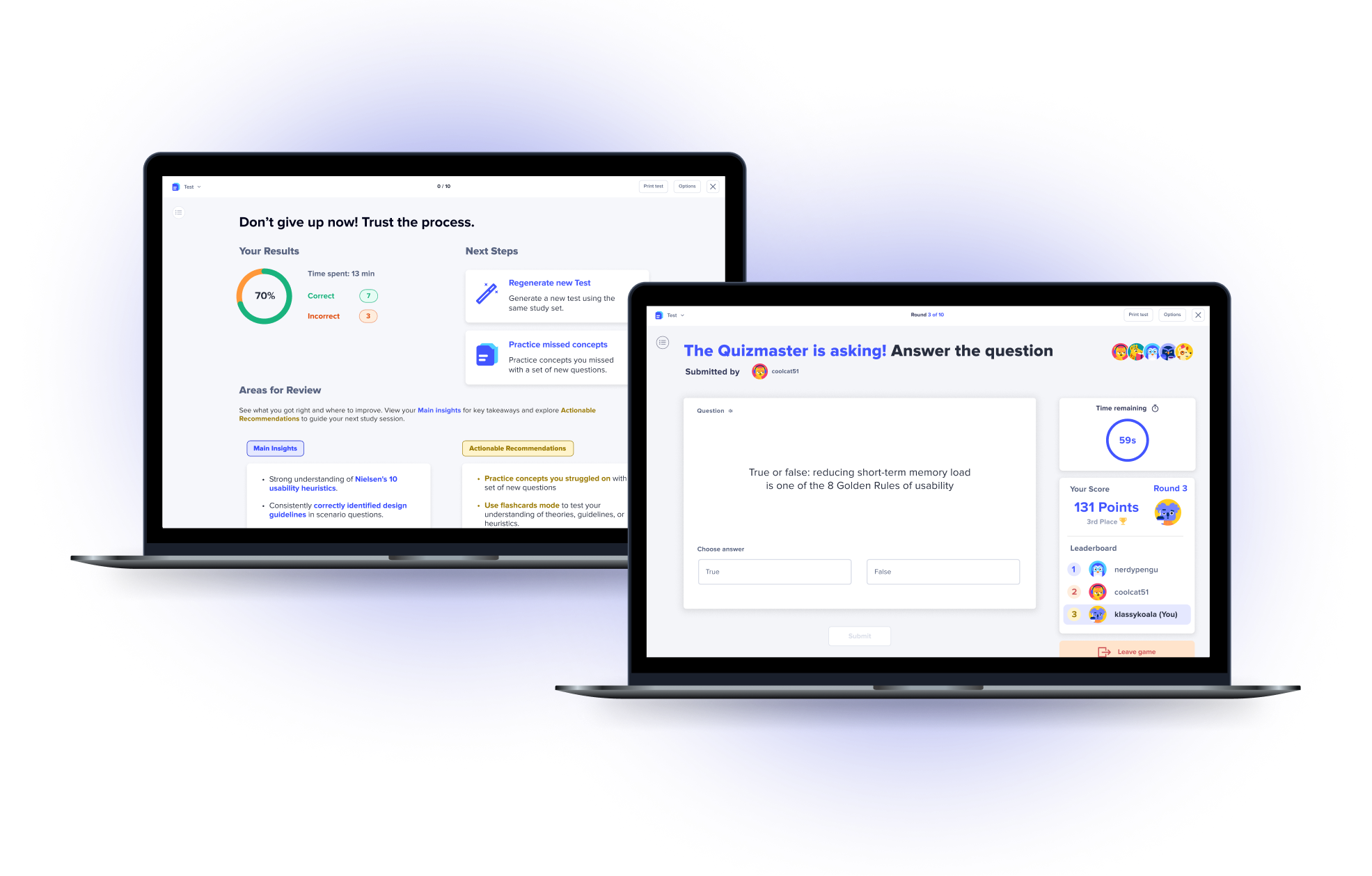
Reimagining Quizlet to support motivation, focus, and collaborative learning.
Project Overview
Although Quizlet makes studying accessible, many still struggle to stay motivated and understand what to focus on next. Through research with college students, our team explored how adaptive guidance, progress visibility, and collaborative learning could create a more engaging study experience.
As part IN4MATX 131: Intro in HCI, we were tasked to redesign an existing platform to improve usability and overall experience. Working within a team, I contributed to user research and designed high-fi prototypes for the AI-adaptive test experience and multiplayer study features. Following the project, I continued refining these concepts to further improve usability, feedback clarity, and student engagement.
Duration
Role
Tools & Skills
The Crew
User Researcher
UI Designer
Oct 2024 - Dec 2024
Figma, FigJam, User research, User testing, Visual design, Prototyping
Project Manager: Varuni Agrawal
Recruiter: Ben Fan
User researcher: Ivy Lee, Sabrina Park
THE PROBLEM
While Quizlet helped students access study materials quickly, students struggled to stay engaged during long study sessions and lacked clear direction on what to review next.
Students described studying as repetitive, isolating, and disconnected from their actual learning progress. They could complete flashcards or tests, but they often lacked meaningful feedback on what they were struggling with or what to study next.
THE SOLUTION
We explored how adaptive support, progress tracking, and collaborative learning could make Quizlet feel more structured, interactive, and engaging.
How might we help college students stay motivated and focused through personalized, guided, and collaborative study experiences?
AI Adaptive Test Mode
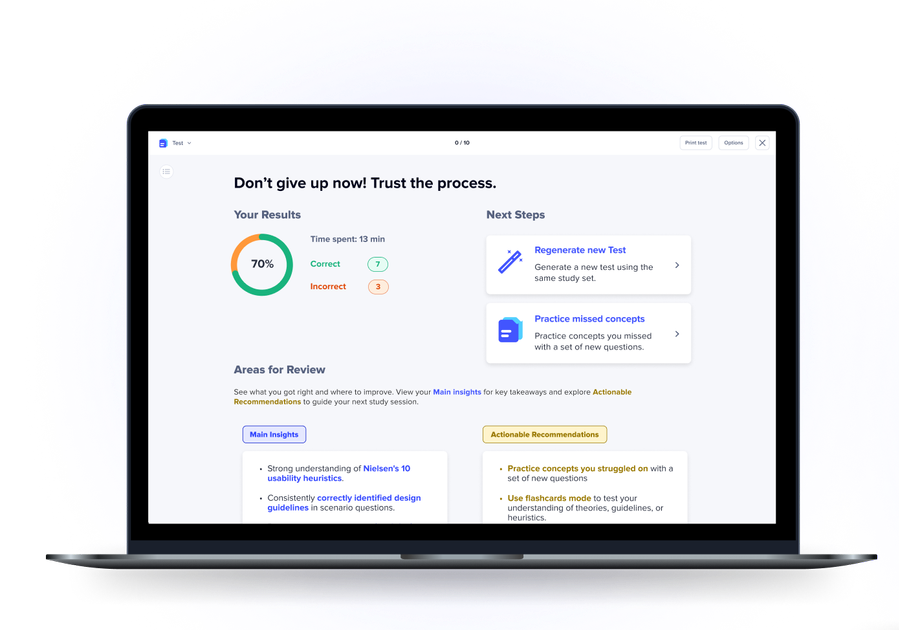
A redesigned test experience that lets students generate more personalized questions, review performance, and receive clearer feedback on weak concepts.
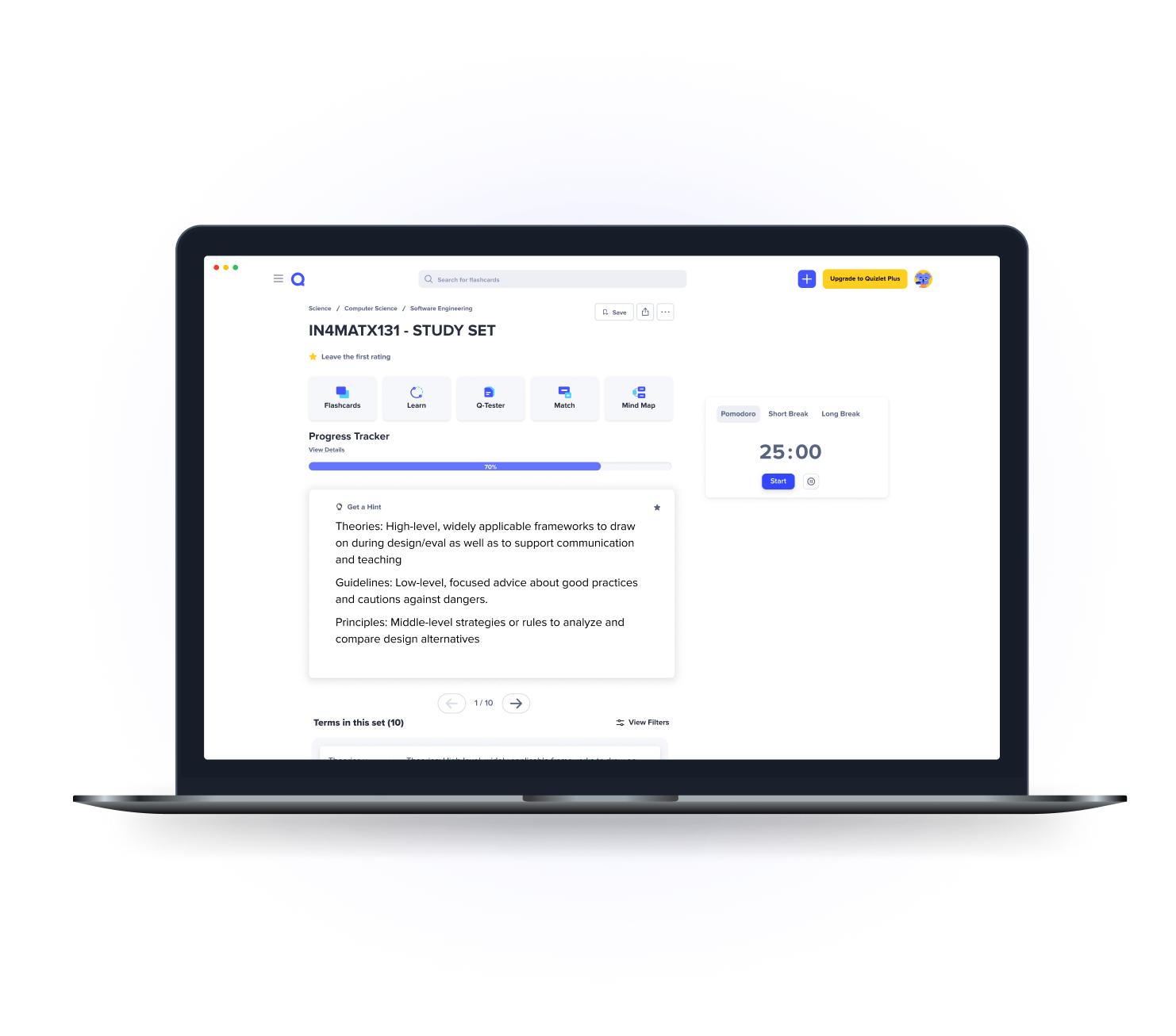
Progress Tracking & Pomodoro Timer
A study dashboard concept that makes progress more visible and helps students structure longer study sessions.
Quiz Battle: Multiplayer Game
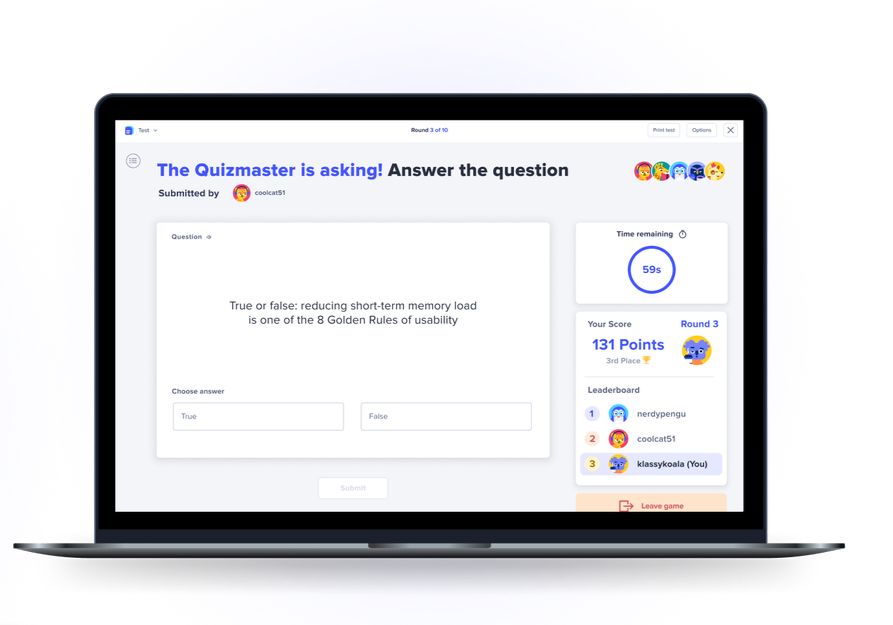
A collaborative quiz mode that lets students study with friends through real-time competition and active recall.
RESEARCHING THE PROBLEM
How we found out where studying breaks down for students

Competitive Analysis
I conducted a competitive analysis of 5 different study platforms: Anki, Duolingo, Forest, Knowt, StudyKit

User Interviews
We conducted 6 user interviews on health students to understand their study habits & Quizlet’s pain points.
Survey
We gathered qualitative insights from 9 UCI students on their study habits & experience with Quizlet
Most platforms primarily supported studying, not learning.
Most tools emphasize memorization, streaks, and basic progress tracking, but fall short in helping students understand how to improve. Personalized guidance is limited, feedback lacks depth, and collaborative learning is largely missing, leaving students to figure out effective study strategies on their own.
What we learned: students need more guidance, feedback, and motivation when studying.
Quizlet doesn’t provide enough study guidance.
Several key features were rarely used.
Many students struggle to stay focused during long study sessions, often falling into procrastination or losing motivation.
Students need motivation.

Many students prefer studying with others because it increases engagement and retention,
Students like to study with others.

Quizlet doesn’t adapt to students’ learning needs. Students receive little guidance about what concepts they struggle with, what to review next, and how they are improving.

Features like Test, Match, and Q Chat were rarely used among students because they don’t fully support how students prefer to study.

“I wish that I could see what concepts I need to study. I think Quizlet struggles to come up with good test questions and detailed feedback so I don’t know how I should study.
- Interview Participant
“Compared to the time spending [on flashcards], it does not let me know which part I’m struggling on.”
- Survey Respondent
“I usually study alone, but I like to study with others because I find that I retain information better when I get tested by friends…”
-Interview Participant
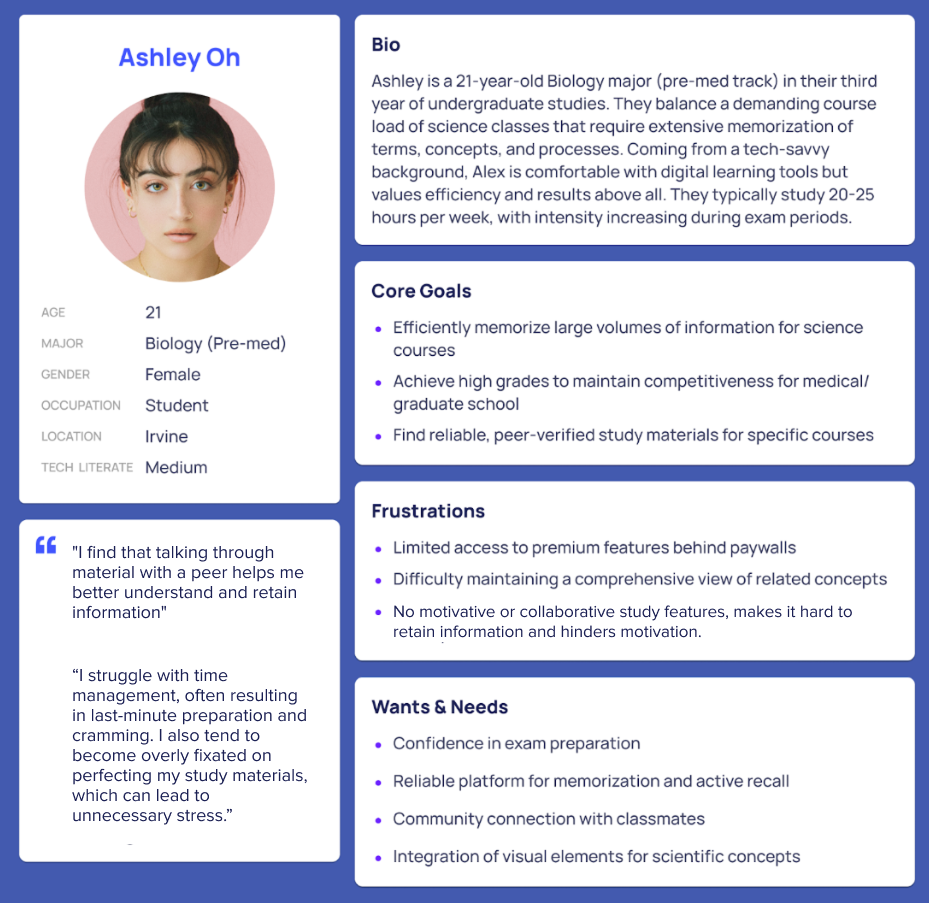
Bringing our insights to life through Ashley.
Meet Ashley, a pre-med student balancing heavy coursework, long study sessions, and the pressure to keep up. While she enjoys studying with peers, she often struggles to stay motivated when studying alone and understanding which concepts she should focus on.
Designing with Ashley in mind helped our team prioritize features that support guidance, motivation, and collaborative studying.
The more we spoke with students, the clearer it became that Quizlet wasn’t meeting the way students actually want to study. Students need a learning experience that adapts to them, keeps them motivated, and helps them progress with confidence.
EVALUATING THE PLATFORM
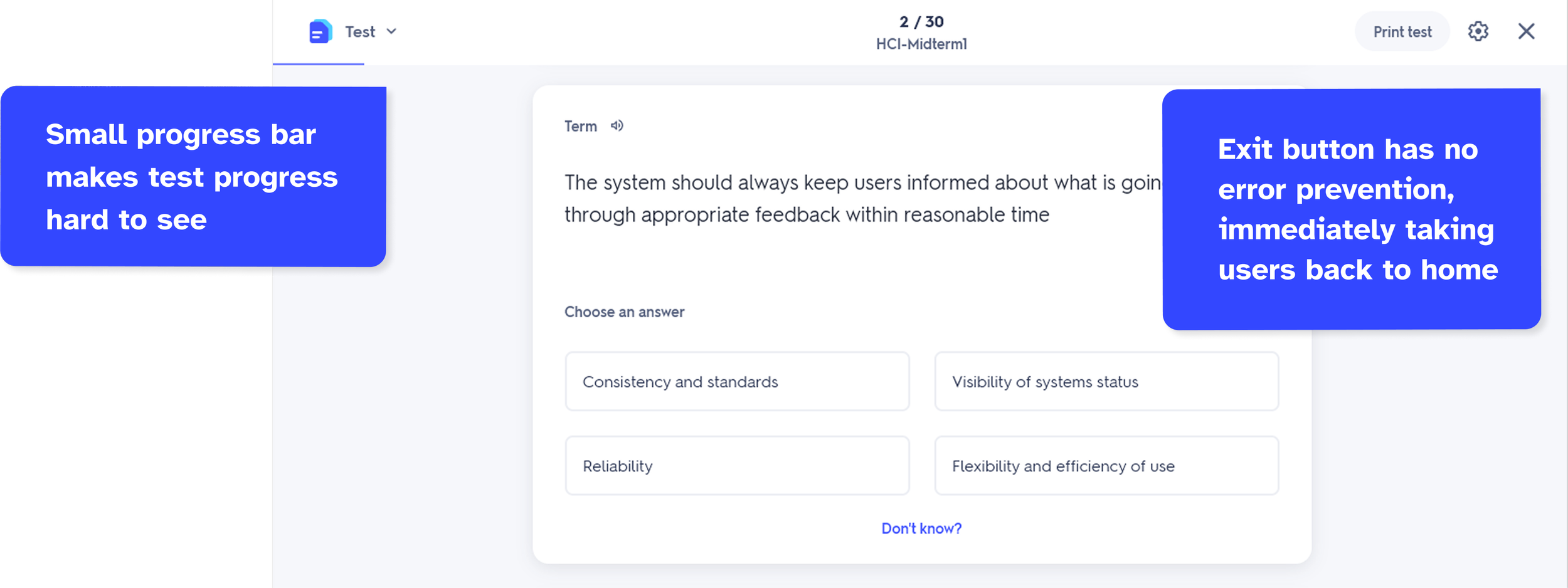
Before we started designing, I conducted a heuristic evaluation of Quizlet’s current Test Mode experience against Nielson’s 10 Usability Heuristics. Here’s what I found:
Limited visibility of progress & lack of error prevention
The small progress bar & no visibility over questions makes it difficult for students to track their progress
Exit has no confirmation, sending users back to the home page and risking lost progress
Test Mode: Weak feedback after testing
Lack of actionable recommendations, leaving students unsure where to focus on next
Feedback lacks depth and guidance for students, making it difficult for students to find areas to improve
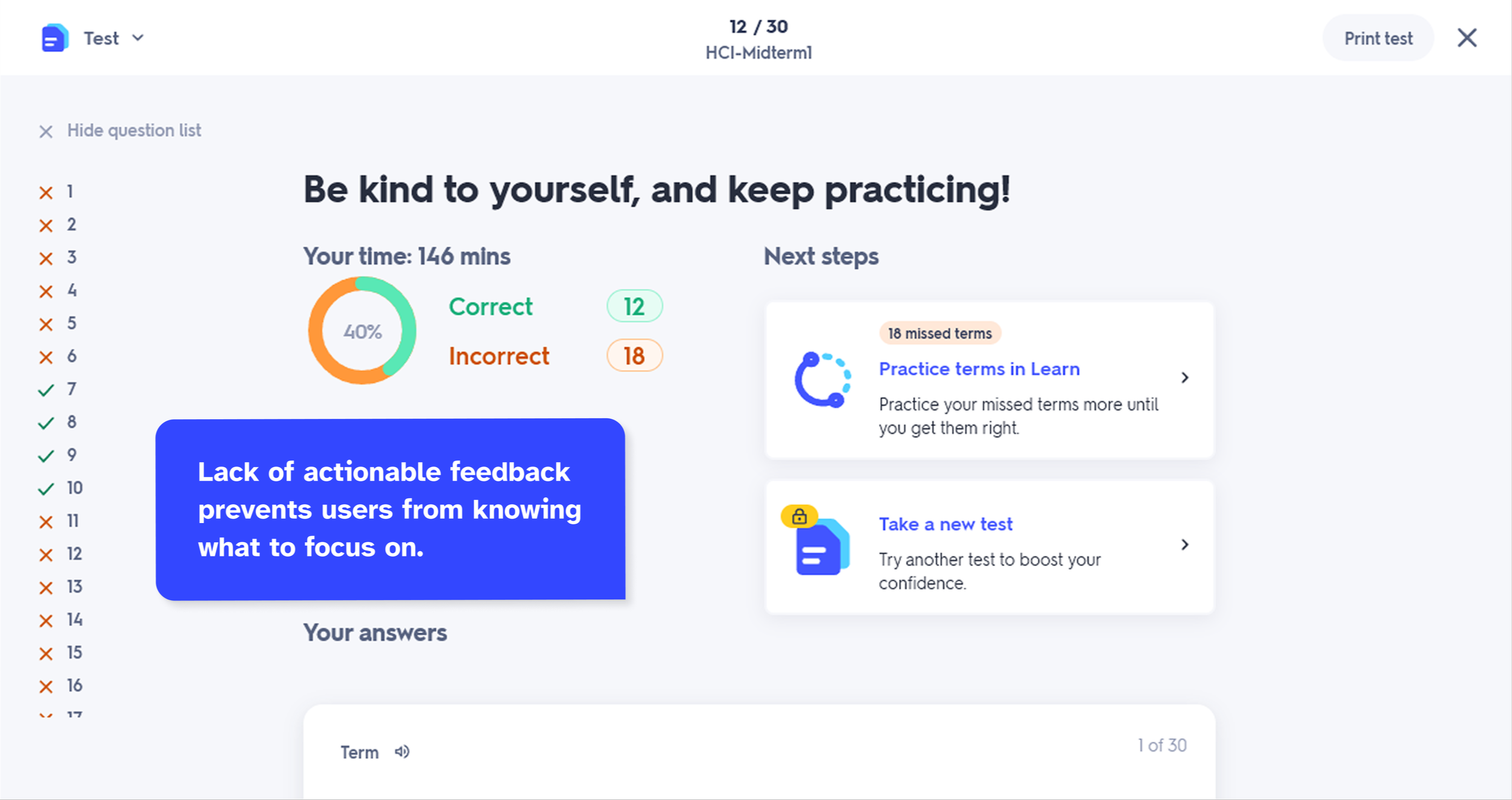
Test Mode: Weak feedback & progress
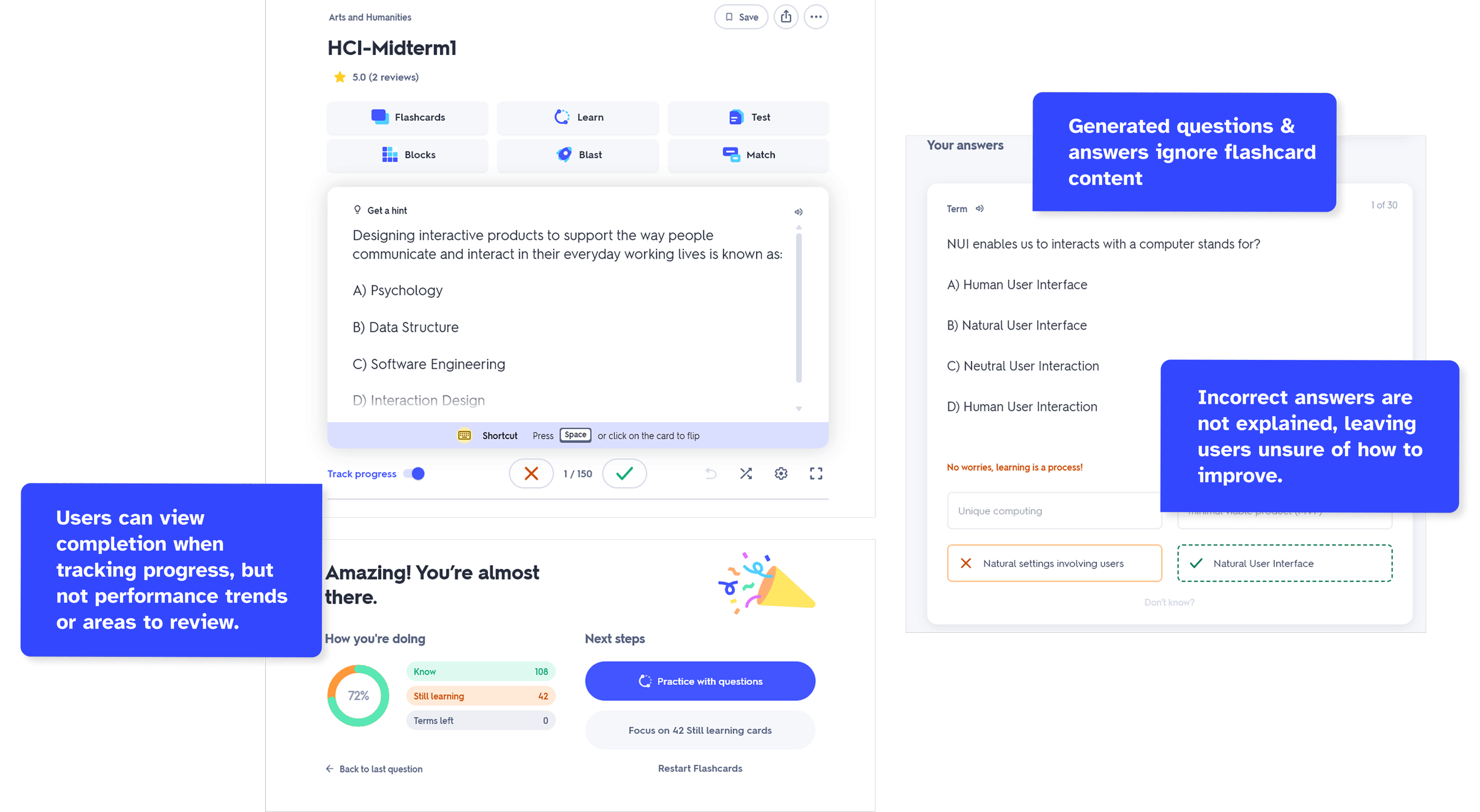
Incorrect answers aren’t explained, preventing students from understanding their mistakes
Test questions reuse flashcards instead of creating new prompts, making studying feel repetitive
Progress tracking only shows completion, offering no insights into strengths or weak areas
COMING UP WITH SOLUTIONS
We now needed to find a way to improve motivation to keep students engaged while also giving them clearer direction on what to study next. Based on our insights, we focused on these 4 design goals:
Help students identify what to focus on next through personalized guidance
Make progress more visible with actionable performance feedback
Reduce procrastination and support sustained focus and retention during long study sessions
Encourage collaborative learning learning to improve accountability and motivation
DESIGNING A SOLUTION
Early wireframes helped us test concepts around AI-adaptive learning, progress visibility, multiplayer studying, and productivity-focused study tools.
Guided by our research insights, we explored how Quizlet’s study experience could better support focus, motivation, and collaboration during long study sessions. I focused on designing the adaptive test experience and the multiplayer quiz flow, translating our concepts into low-fidelity wireframes to explore interactions and prepare the designs for usability testing.
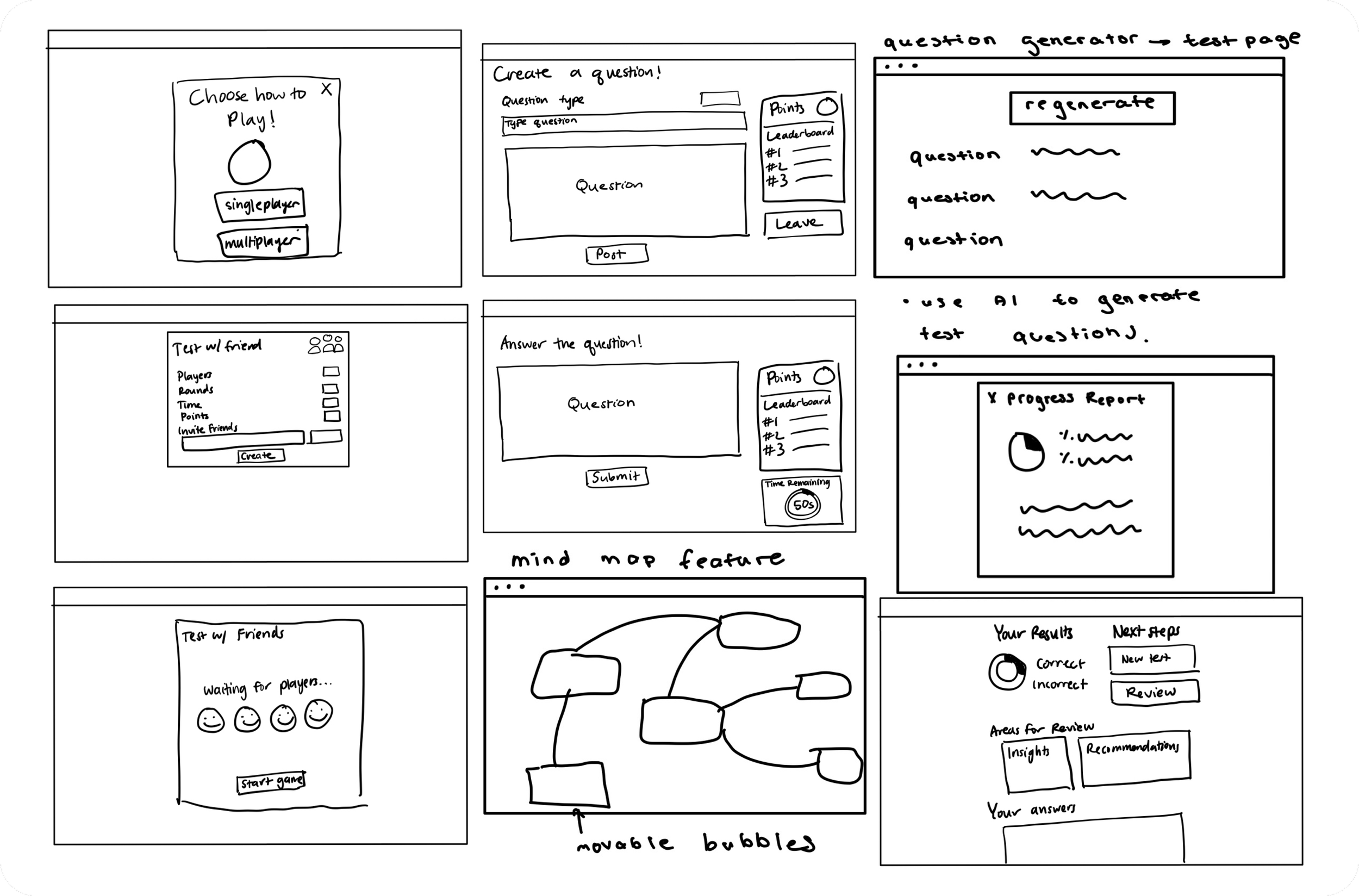
Low-fidelity sketches of multiplayer test mode. Originally, I named it “Test with Friends”
We sketched the AI-adaptive features for Test Mode and progress tracking
Team low-fidelity sketches of multiplayer features, test mode, progress tracking, mind mapping
My proposed solution: redesigning Quizlet’s current test mode for AI-adaptation and collaborative studying.
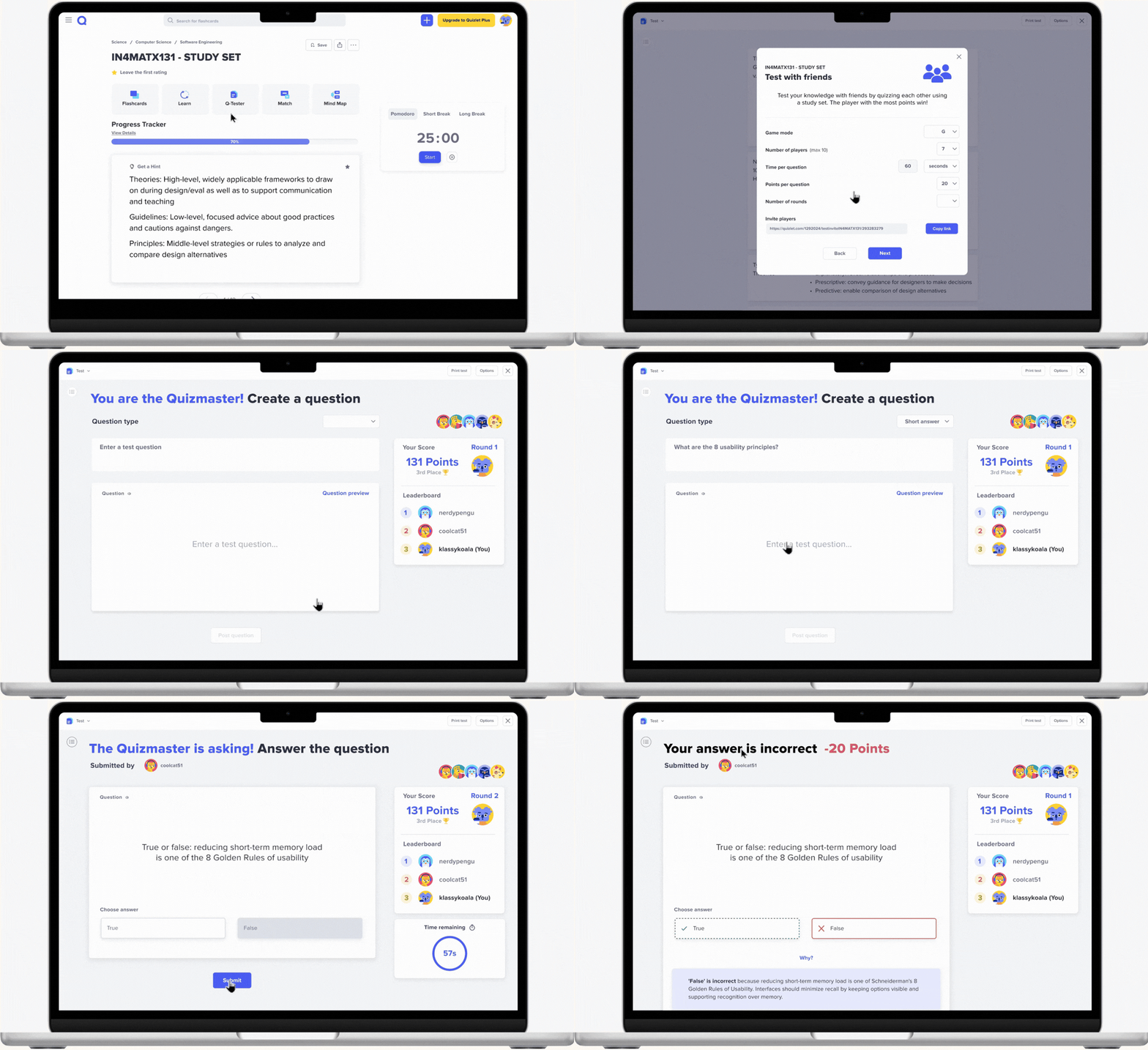
Research showed that students often enjoyed studying with peers because it helped them stay engaged and retain information better. To support this, I designed a multiplayer mode in addition to Quizlet’s Test mode, called Test with Friends, allowing students to test each other in real-time.
Initial Idea: Test Mode with an additional mode, called Test with Friends
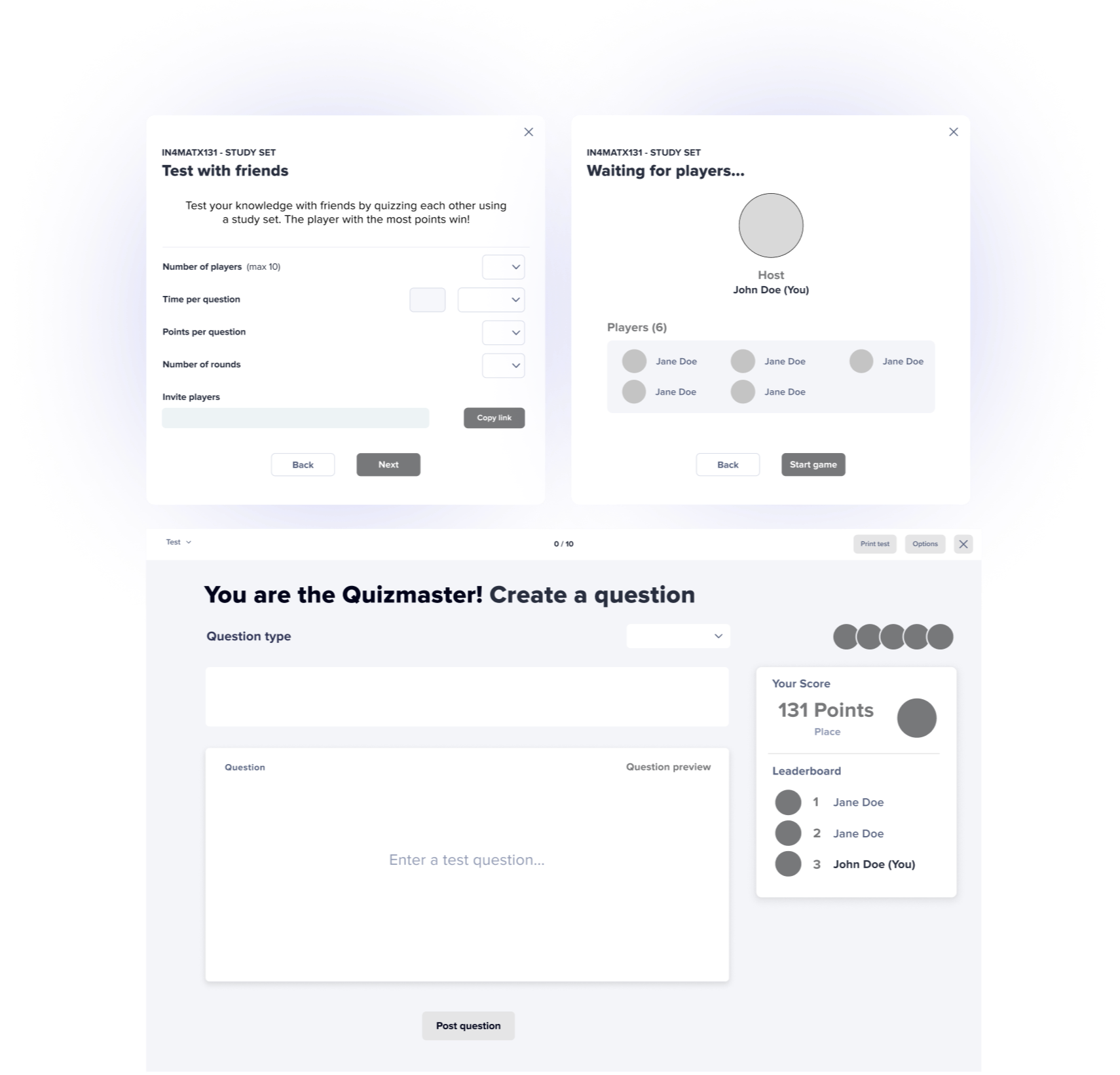
Mid-fi designs for multiplayer study mode
Original task flow:

Design goal: Make studying feel more active and collaborative.
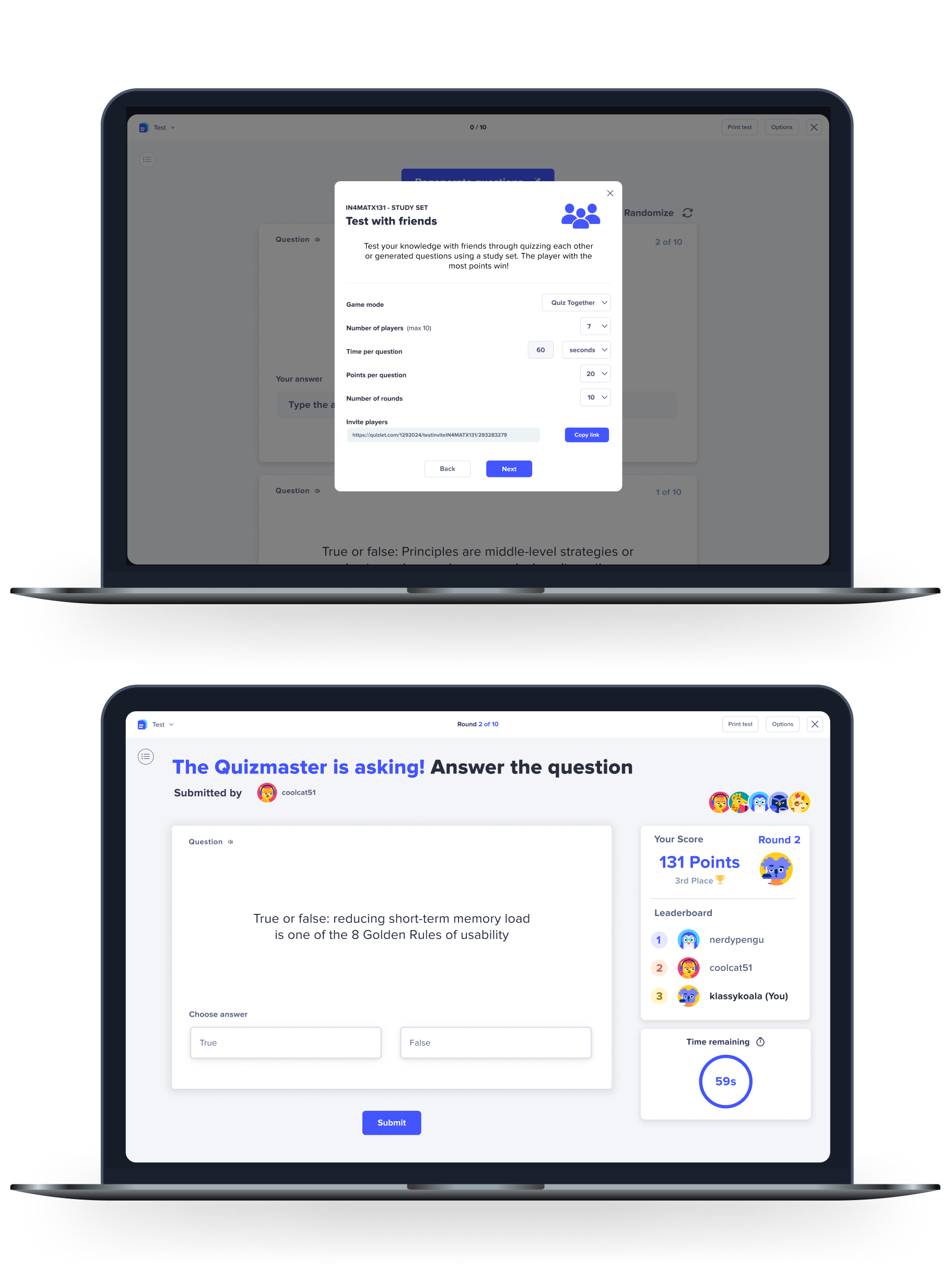
Hi-fi designs for test mode: Test with Friends

Test Mode AI-powered Progress & Insights
Design goal: Give students clearer control over what to study and actionable feedback after testing.
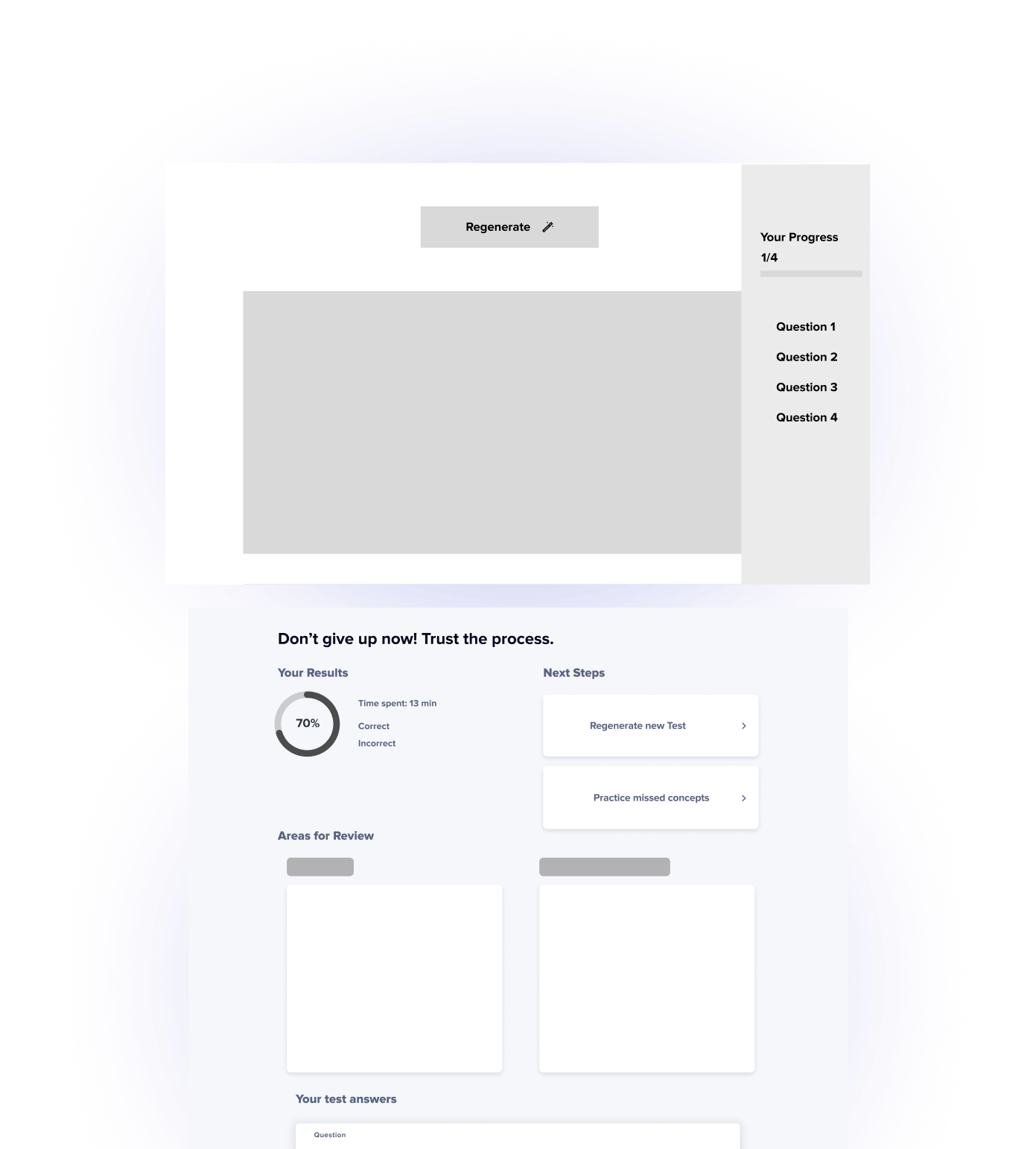
In Quizlet’s original test mode, students could answer questions and see results, but feedback was limited. Students still had to figure out which concepts needed more attention on their own.
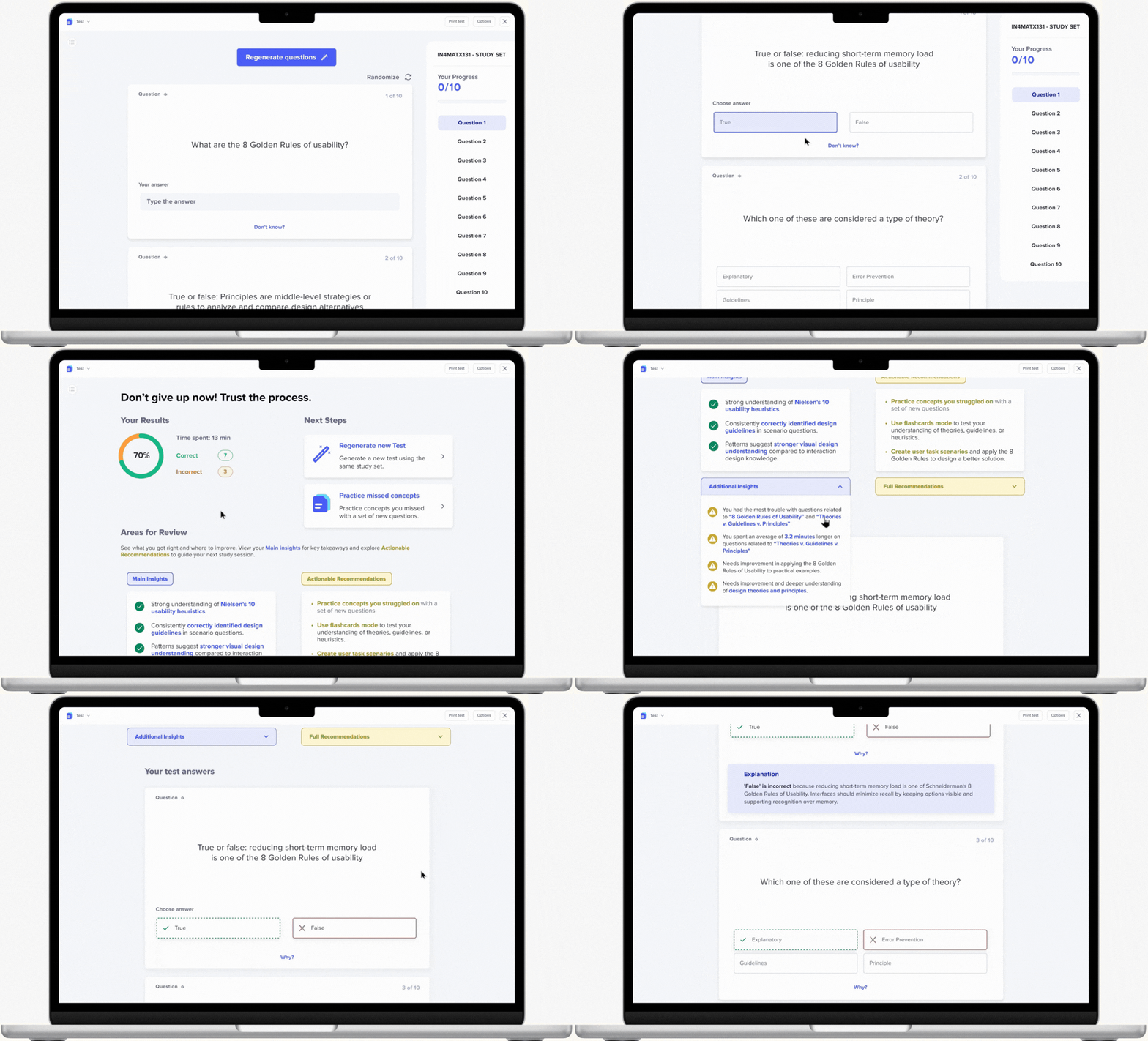
I redesigned Quizlet’s original test mode into an AI-powered experience that allows students to regenerate test questions, view progress, and receive actionable feedback after each test. This helps students like Ashley identify weak concepts and focus their study time more effectively.
Task flow:

Mid-fi designs for AI-adaptive test mode
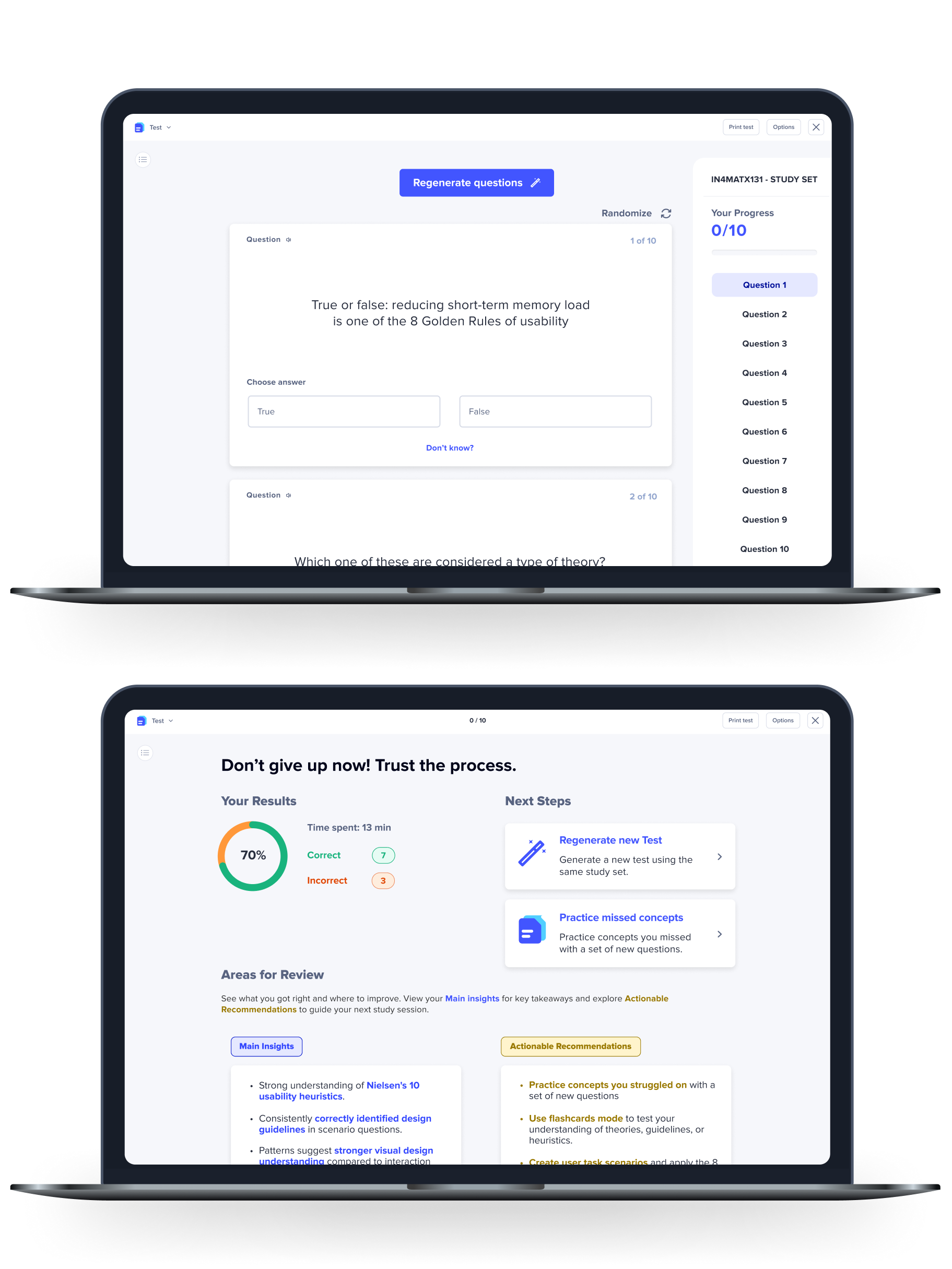
Hi-fi designs for AI-integrated test mode
TESTING OUR SOLUTION
I took the project a step further by validating the redesigned study experience through moderated think-aloud usability tests with 4 students.
After building the prototype, I tested the redesigned experience with 4 students. Participants were asked to complete several key tasks: generating and taking a test, reviewing progress insights, joining a multiplayer game, starting a pomodoro timer, and using the mind map feature.
KEY INSIGHTS
The concept was promising, but the multiplayer mode flow was confusing and AI feedback was difficult to scan for participants.
Students responded positively to the new study features, but many struggled to locate the multiplayer mode, navigate the game flow, and exit the session clearly. Participants also found the AI feedback difficult to scan, making it harder to identify what to improve. These insights led me to refine the multiplayer task flow, add clearer exit/error-prevention cues, and redesign the feedback experience to be more actionable.
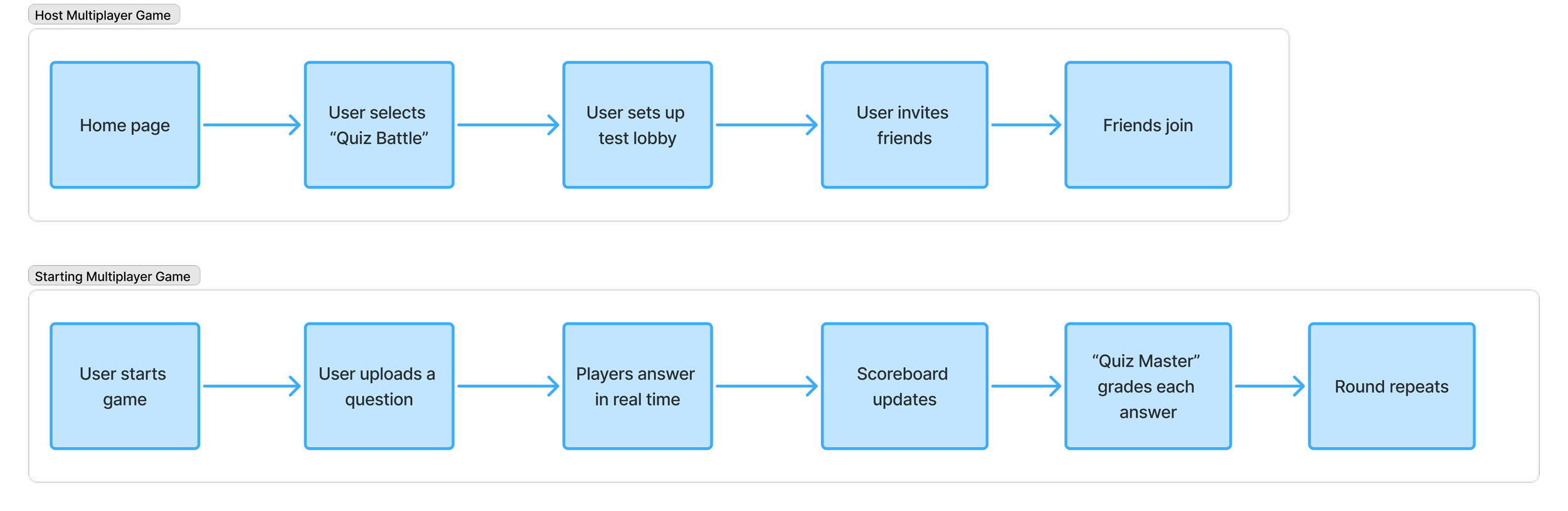
Refining the Multiplayer Flow for Clarity
FINAL ITERATIONS
The final iteration addressed the main usability issues from testing: unclear multiplayer navigation, limited exit guidance, and feedback that was difficult to scan.
-
![]()
Problem: The multiplayer entry point was hard to find and navigate through
Feature was originally integrated with Test mode and named “Test with Friends”. The original prototype missed essential interaction steps which disrupted the flow, making the game feel incomplete for participants.
-
![]()
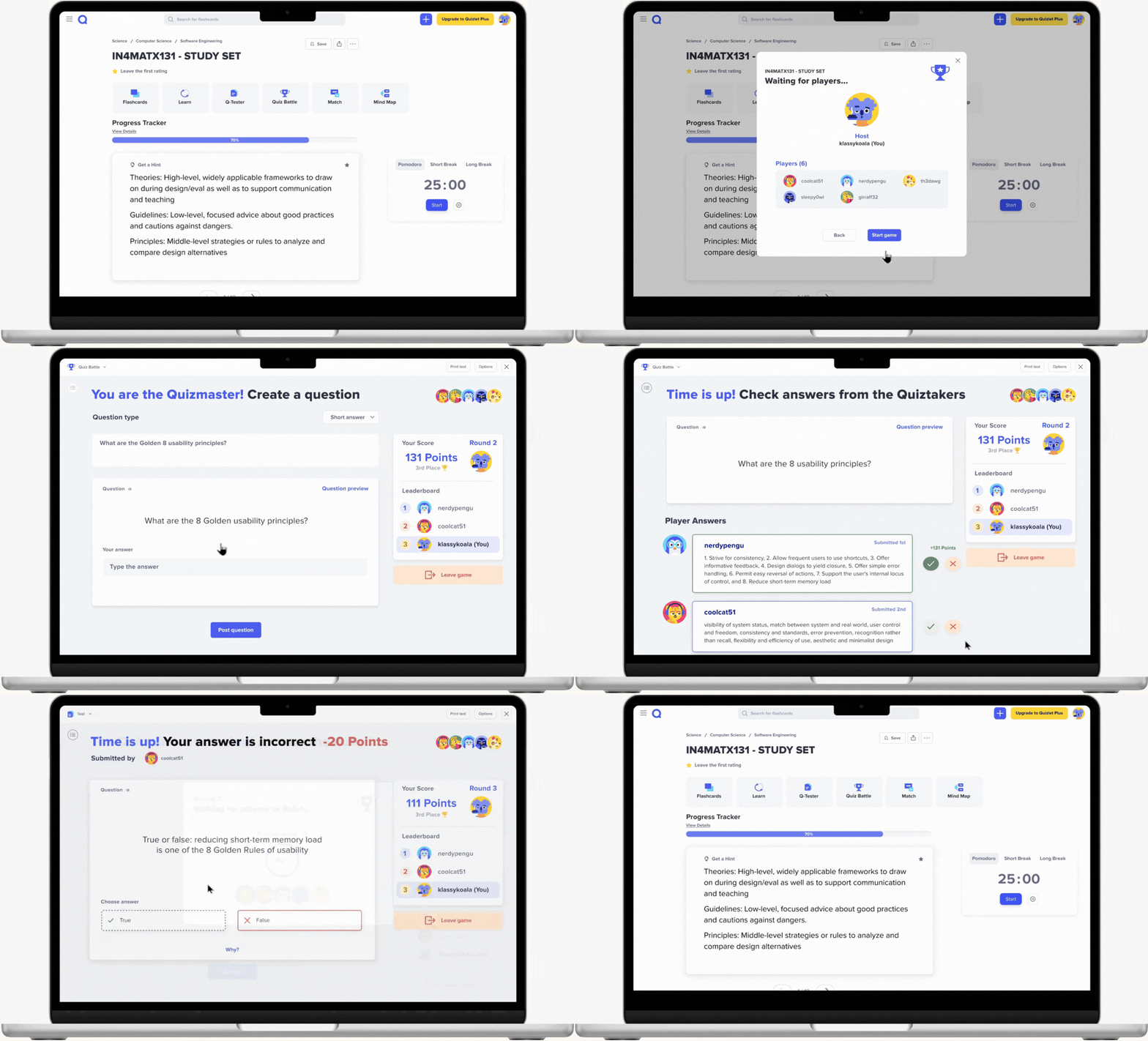
Solution: Made multiplayer access more visible. Test with Friend → Quiz Battle
I improved multiplayer discoverability by moving Test With Friends to the home page and renaming it to Quiz Battle, in addition to redesigning the flow to simulate a full round of the game and adding clearer exit controls.
-
![]()
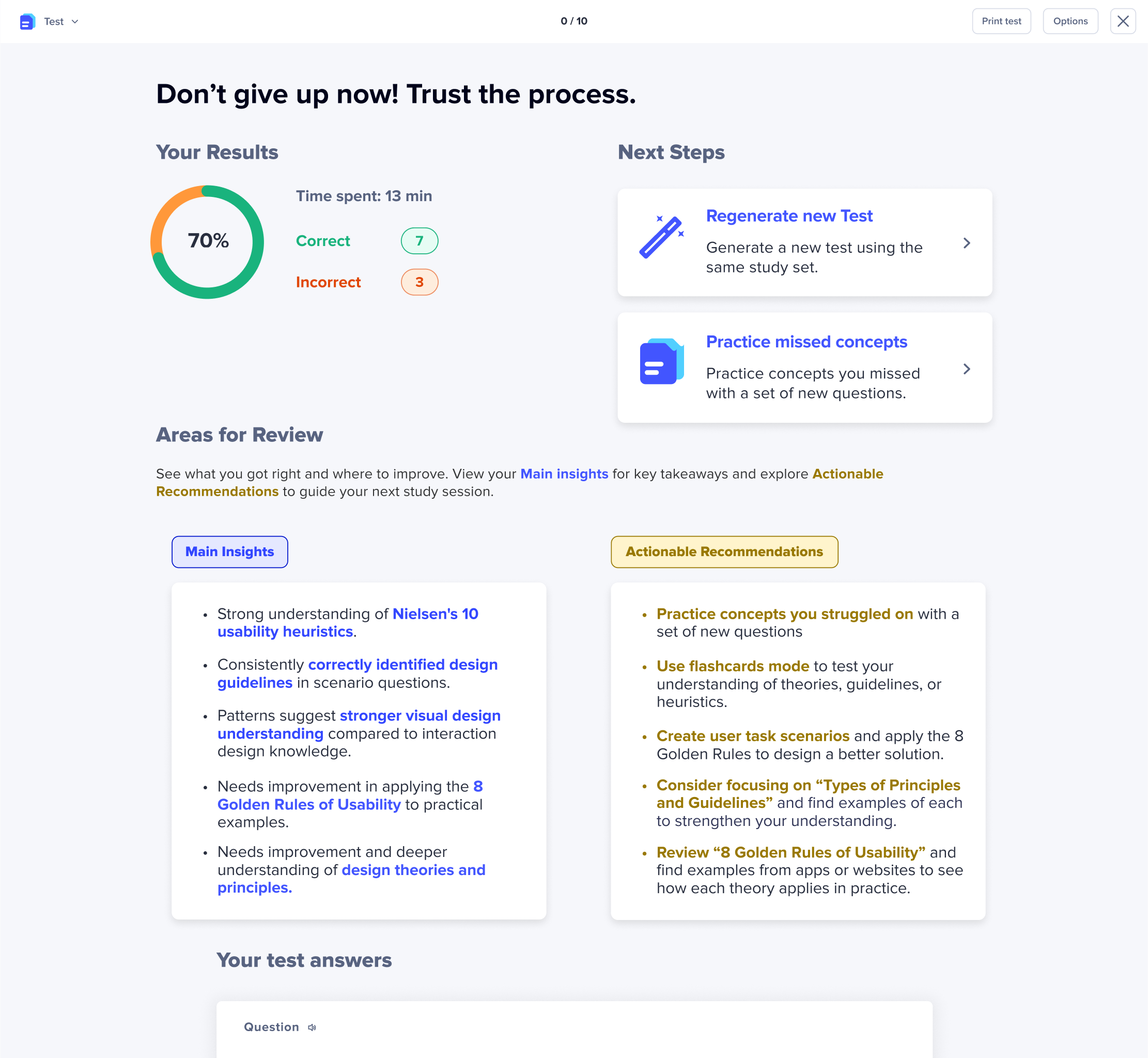
Problem: AI recommendations were difficult to digest at a glance
AI recommendations were lengthy and visually dense, increasing cognitive load and making it difficult for students to identify key study insights at a glance.
-
![]()
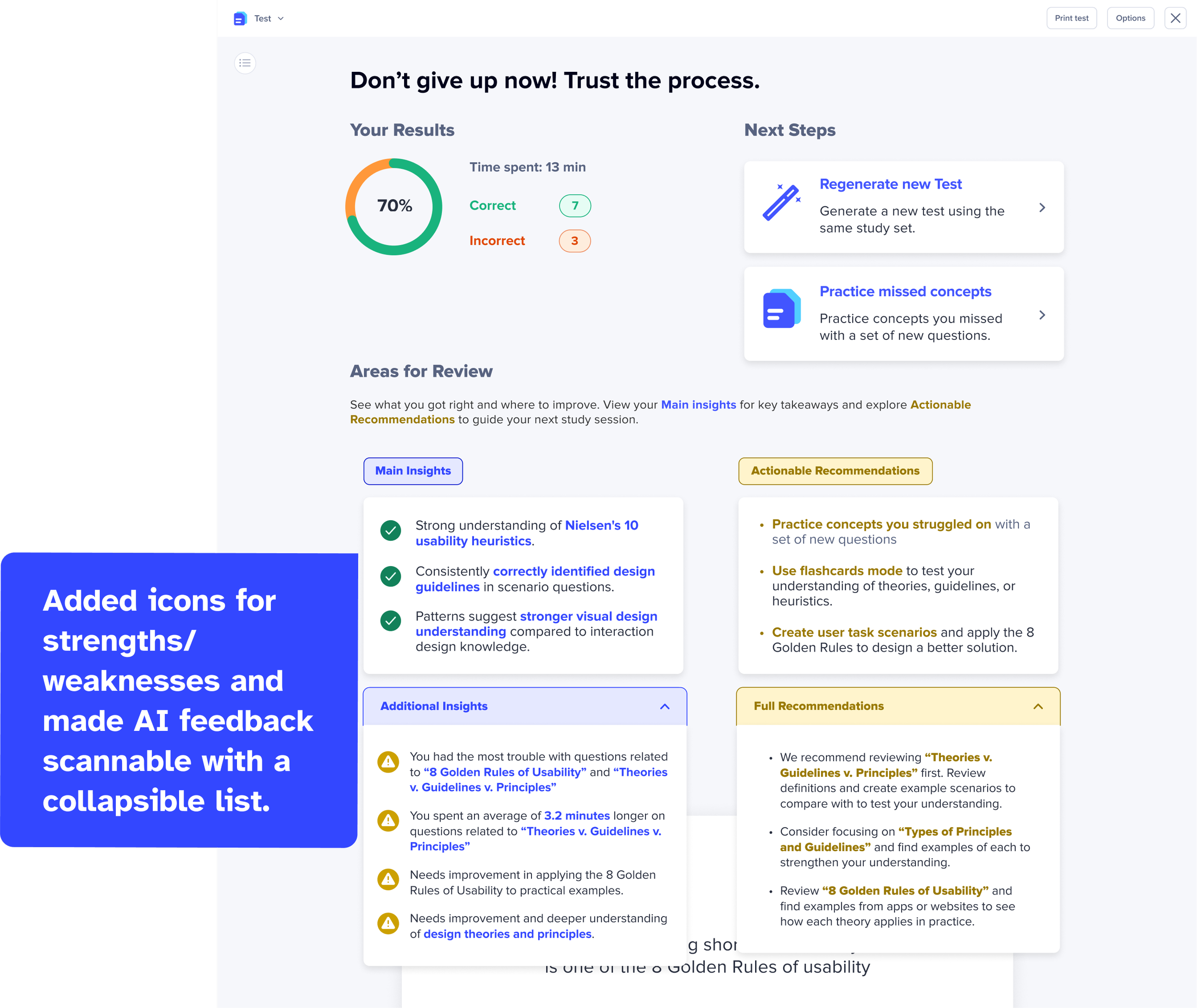
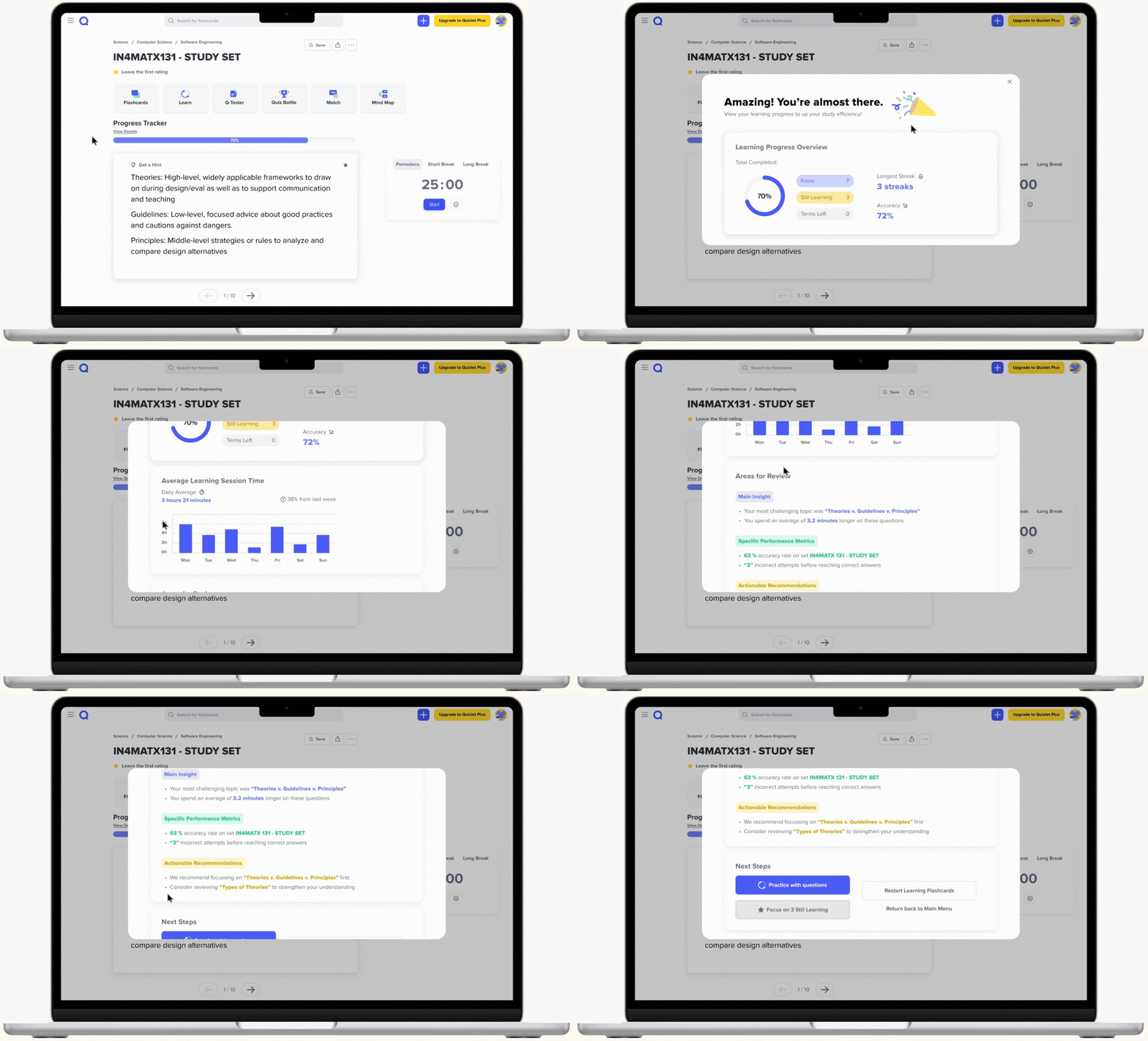
Solution: Improved feedback hierarchy, receiving immediate overview of what to focus on
I introduced progressive disclosure, showing the top 3 insights by default and placing additional feedback behind an expandable dropdown to make recommendations easier to scan.
Click on the laptop to interact!
The final redesign reflects a user-centered design approach to help students study more efficiently, through adaptive AI, and engaging tools. Guided by research and usability testing during my first course project, I'm incredibly proud to have transformed initial ideas into a fully interactive Quizlet prototype, while learning the core design skills and principles for the first time!
Test Your Knowledge Against Friends With Quiz Battle
Compete with friends in a fun, multiplayer quiz experience designed to reinforce material through asking questions and active recall.
Try it yourself!
Adaptive questions and actionable insights show you exactly what to focus on next
Smarter Testing With Adaptive AI and Personalized Feedback
Topic-based insights, study time, and trends make learning feel measurable and motivating.
See Your Progress Clearly and Know Exactly Where to Improve
Final Prototype
Reflecting on the Process
What I learned from this experience!
Gained real exposure to design and usability principles, building my first fully interactive prototype for my first website and redesign project!
Applied the Design Thinking process and learned the value of research, testing, and iteration.
Went beyond the original course scope by revisiting the project independently to strengthen my designs through additional research, refining designs, and iterating on prototypes.
Gained confidence in my ability to navigate the full design process on my own, from identifying pain points to prototyping improved experience